



Medically Reviewed by Dr. Hollander on September 22, 2026
Your child just got braces, and their soccer season is two weeks away. It’s a completely normal situation, and the good news is that orthodontic treatment and sports can absolutely coexist. Most kids in braces continue playing their favorite sports without interrupting their treatment or athletic performance. What matters most is having the right protection in place, so both their smile and their game stay on track.
At Pediatric Dentistry of San Jose, we see active kids every day, and helping families navigate early orthodontics alongside busy schedules is something we genuinely enjoy. Our team is here to make sure your child’s treatment plan works with their life, not against it. Whether they play basketball, football, martial arts, or swim competitively, we’ll walk you through exactly what to expect and how to keep their mouth safe.
Why Sports and Braces Require Extra Attention
Playing sports with braces introduces a few important factors parents should understand. Brackets, wires, and orthodontic appliances are effective at moving teeth, but they can also cause soft tissue injuries if a child takes a hit to the face without proper protection. The inside of the cheeks, lips, and gums are all vulnerable to cuts and abrasions when metal hardware is involved.
Beyond soft-tissue injuries, there is also a risk of damage to the orthodontic appliance itself. A broken bracket or bent wire may not seem like a dental emergency, but it can disrupt treatment progress and require an unplanned office visit. Protecting the appliance protects the timeline of your child’s treatment.
Contact Sports vs. Non-Contact Sports
The amount of protection your child needs depends on the sport. Sports like football, basketball, soccer, wrestling, and martial arts come with a higher chance of hits to the face, so a properly fitted mouthguard should be worn for every practice and game. Sports like swimming, tennis, or track are usually lower risk, but a mouthguard can still be a smart extra step for any activity where falls or contact are possible.
What surprises many parents is the American Association of Orthodontists’ recommendation that all athletes, regardless of sport, wear mouthguards during play. This guidance reflects how often unexpected collisions occur even in low-contact environments.
Choosing the Right Mouthguard for Braces
Not all mouthguards work the same way, especially when your child has braces. A standard boil-and-bite mouthguard from a sporting goods store might seem like the easy choice, but it is not made to fit around brackets and wires. It can press against the braces, cause discomfort, keep the mouthguard from fitting properly, and even get in the way of tooth movement over time.
There are several types to consider, and knowing the differences helps parents make an informed choice.
- Stock mouthguards: Pre-formed and available at most sporting goods stores; offer minimal protection and a poor fit for kids with braces.
- Boil-and-bite mouthguards: Moldable at home using hot water; a common choice, but often not wide enough to fit comfortably over orthodontic hardware.
- Orthodontic mouthguards: Designed for patients in active treatment; provide coverage over both the teeth and appliances without interfering with tooth movement.
- Custom-fabricated mouthguards: Made directly from your child’s dental impressions; the gold standard for fit, comfort, and protection.
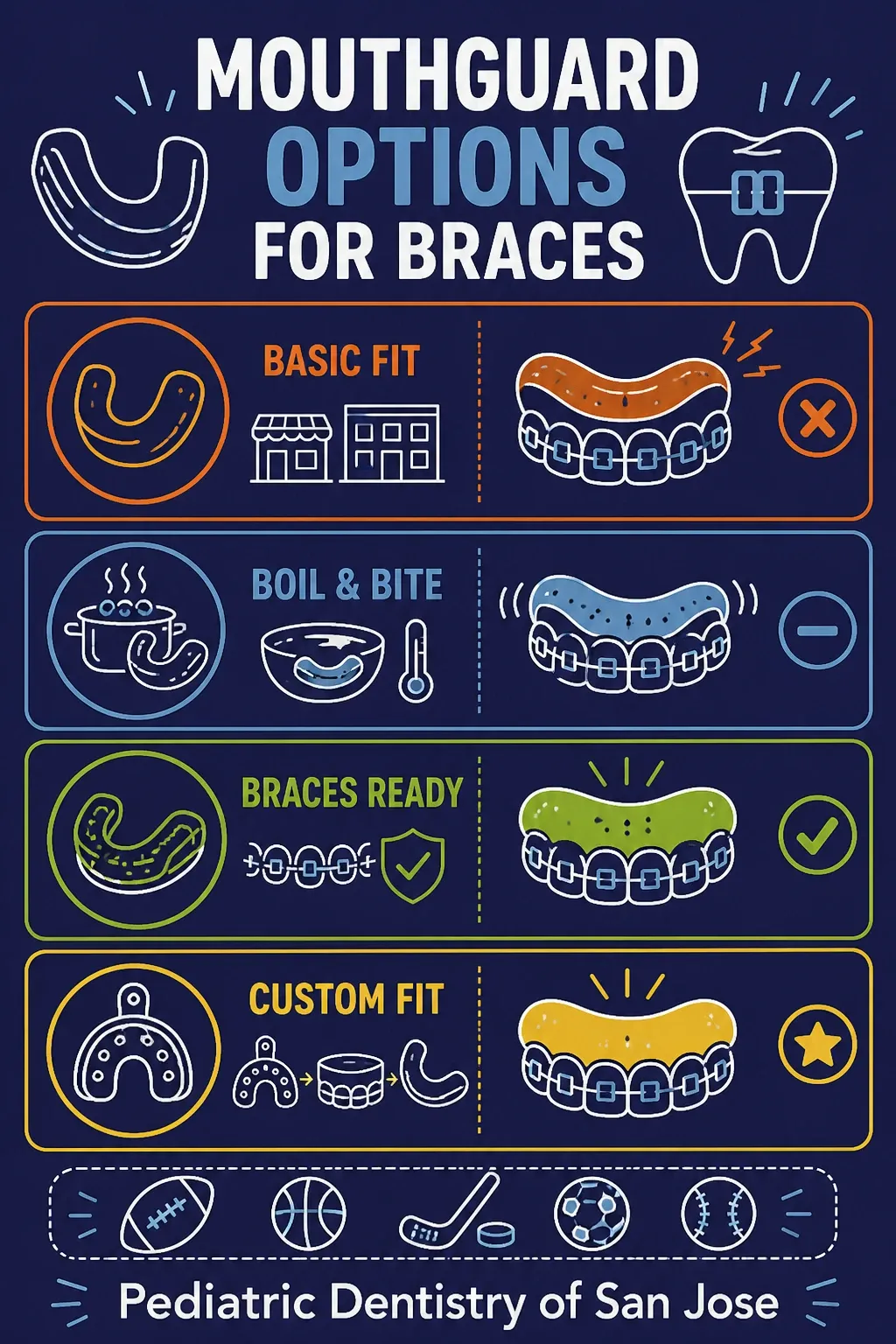
At our office, we can help you find a pediatric mouthguard solution that fits correctly and keeps your child comfortable during play. A well-fitted guard is one a child will actually wear consistently, and that’s what matters most.
What to Do If Something Gets Damaged
Even with proper protection in place, accidents happen. Knowing what to do when your child’s appliance is damaged saves time and reduces stress. If a bracket breaks or a wire pops loose after a collision, your child may notice some irritation or pressure in the mouth. In many cases, a small piece of orthodontic wax can be placed over a sharp or protruding wire to provide temporary relief until you can be seen.
If there is any bleeding, swelling, or if a tooth appears visibly cracked or displaced, that calls for a visit to our pediatric emergency dentistry team. Dental emergencies in the middle of a sports season are more common than parents expect, and having a trusted office to call makes all the difference. Prompt attention to suspected tooth fractures or significant appliance damage protects both the tooth and the overall treatment plan.
Talking to Your Child’s Orthodontist About Sports
Before each season, it is worth having a quick conversation with your child’s orthodontist about the upcoming activity. This is especially true if their sport involves a helmet, face mask, or headgear, as these can sometimes interact with certain orthodontic appliances. Your child’s orthodontist can flag any concerns specific to their current stage of treatment and recommend the best protection.
Our orthodontist, Dr. Hollander, is a Diplomate of the American Board of Orthodontics and holds a master’s degree in Oral Biology from UCLA. His depth of training means he can anticipate how physical activity may interact with your child’s specific appliance and give you practical guidance rather than a one-size-fits-all answer. Even if you’re mid-season when a concern comes up, reaching out promptly means we can address it before a minor issue becomes a treatment delay.
Frequently Asked Questions About Braces and Sports
Here are the questions parents most often bring to us before their child’s sports season begins.
Do kids with braces have to sit out from contact sports?
No. Children with braces can continue participating in contact sports when they wear a properly fitted mouthguard. The goal is protection, not restriction. A mouthguard designed for orthodontic patients covers both the teeth and the appliances, reducing the risk of injury without interfering with play.
What happens if a bracket breaks during a game?
A broken bracket is not usually a dental emergency, but it should be addressed promptly to avoid disrupting treatment progress. Place orthodontic wax over any sharp edge for temporary relief and contact our office to schedule a repair appointment. If you notice significant pain, swelling, or a tooth that feels loose or shifted, reach out to us right away.
Can my child swim with braces?
Yes, swimming is generally safe with braces. The chlorine in pool water does not damage brackets or wires when exposure is at normal recreational levels. No mouthguard is needed for most swimming activities, though competitive swimmers in events with physical starts or turns may still benefit from one as a precaution.
How do I know if a custom mouthguard is worth the cost for my child?
For children in active orthodontic treatment who play contact sports regularly, a custom mouthguard is usually worth the investment. It fits precisely over the brackets and wires, stays in place during play, and provides substantially better protection than an off-the-shelf option. It also tends to be more comfortable, which means your child is more likely to actually wear it.
Orthodontic and Sports Care at Pediatric Dentistry of San Jose
At Pediatric Dentistry of San Jose, our orthodontic care is designed with real families in mind. Kids are active, schedules are full, and treatment should fit around life, not the other way around. Our team brings board-certified training, Stanford hospital privileges, and a deep commitment to every child’s long-term dental health, so you can trust the guidance you receive here is grounded in both science and experience.
If your child is currently in orthodontic treatment or approaching the age when it may begin, we encourage you to bring your sports-related questions to your next appointment. Whether you need a custom mouthguard, a quick evaluation of a damaged bracket, or simply want to know what to expect this season, we are here to help. Contact our office to schedule an appointment and get your child game-ready.
ABOUT THE AUTHOR
Diplomate, American Board of Orthodontics — Pediatric Dentistry of San Jose, San Jose, CA
Dr. Hollander is a Diplomate of the American Board of Orthodontics and holds a master’s degree in Oral Biology from UCLA. As the in-house orthodontist at Pediatric Dentistry of San Jose, he brings specialized training and a collaborative approach to every evaluation and treatment plan he develops for young patients.