



Medically Reviewed by Dr. Hollander on September 25, 2026
A slightly crooked tooth at age seven may not seem urgent, but what looks minor today can quietly grow into something far more complex by the time your child is a teenager. Orthodontic issues rarely resolve on their own. In fact, many of the problems that require the most involved, expensive treatment in adolescence and adulthood were detectable and addressable years earlier, when a child’s jaw was still developing and naturally responsive to guidance.
At Pediatric Dentistry of San Jose, we understand how much parents want to make thoughtful decisions about their child’s care, especially when a treatment isn’t urgent. Our team provides early orthodontic evaluations to help families understand what’s happening with their child’s bite and jaw development, and whether early intervention is truly warranted. The goal isn’t to rush treatment. It’s to make sure that waiting doesn’t end up costing your child more in the long run.
Why Timing Matters in Orthodontic Care
Orthodontic treatment works best when it moves with your child’s natural growth. Because a child’s jaw is still growing and changing, there are perfect windows of opportunity where we can guide that growth much more easily than we could later on.
When those windows close, correcting the same issues often requires longer treatment times, more complex appliances, or, in some cases, surgical intervention. The American Association of Orthodontists recommends that children receive an orthodontic evaluation by age seven, when the first permanent molars and incisors have typically come in. At this stage, a trained eye can identify bite relationships and jaw positioning issues that simply can’t be seen in a developing smile without professional evaluation.
The Real Costs of Waiting
Delaying orthodontic care isn’t just a question of aesthetics. It can create a range of complications that directly affect a child’s health and your family’s finances.
More Extensive Treatment Later
A child with a significant crossbite at age eight may only need a palate expander and monitoring. That same crossbite at fourteen, when jaw growth is largely complete, may require orthodontic appliances worn for twice as long, combined with other interventions. Simple problems become harder problems when the jaw loses its natural flexibility. Treatment that might have taken one phase over twelve months can become a multi-year commitment.
Increased Risk of Tooth Damage and Wear
Misaligned teeth don’t just look off. They create uneven bite pressure that accelerates enamel wear, which doesn’t grow back. Teeth that crowd or protrude are also more vulnerable to chipping and injury, particularly in active kids. Our orthodontist, Dr. Hollander, is a Diplomate of the American Board of Orthodontics and routinely identifies these wear patterns during early evaluations before they become permanent.
Oral Hygiene Challenges
Crowded or overlapping teeth are notoriously difficult to clean. Children who struggle to brush and floss around misaligned teeth are at a significantly higher risk for cavities and gum disease. Consistent pediatric dental exams and cleanings help catch these problems early, but they’re made easier when teeth are properly aligned.
Higher Financial Costs Over Time
Early treatment, often called Phase 1, addresses specific problems at the right developmental stage and can simplify or even eliminate the need for a second, more involved phase of treatment later. Families who delay and face full comprehensive orthodontics in adolescence often find themselves paying more over time than if targeted early care had been started when it was first recommended.
What Early Orthodontic Evaluation Looks Like
An early orthodontic assessment isn’t a commitment to braces. It’s a conversation. According to the AAPD’s clinical practice guidelines on developing dentition and occlusion, evaluation during the mixed dentition stage allows providers to identify skeletal, space, and bite issues when they’re most manageable. At Pediatric Dentistry of San Jose, we use this evaluation to determine whether your child falls into a “watch and wait” category or whether there’s a clear benefit to earlier action.
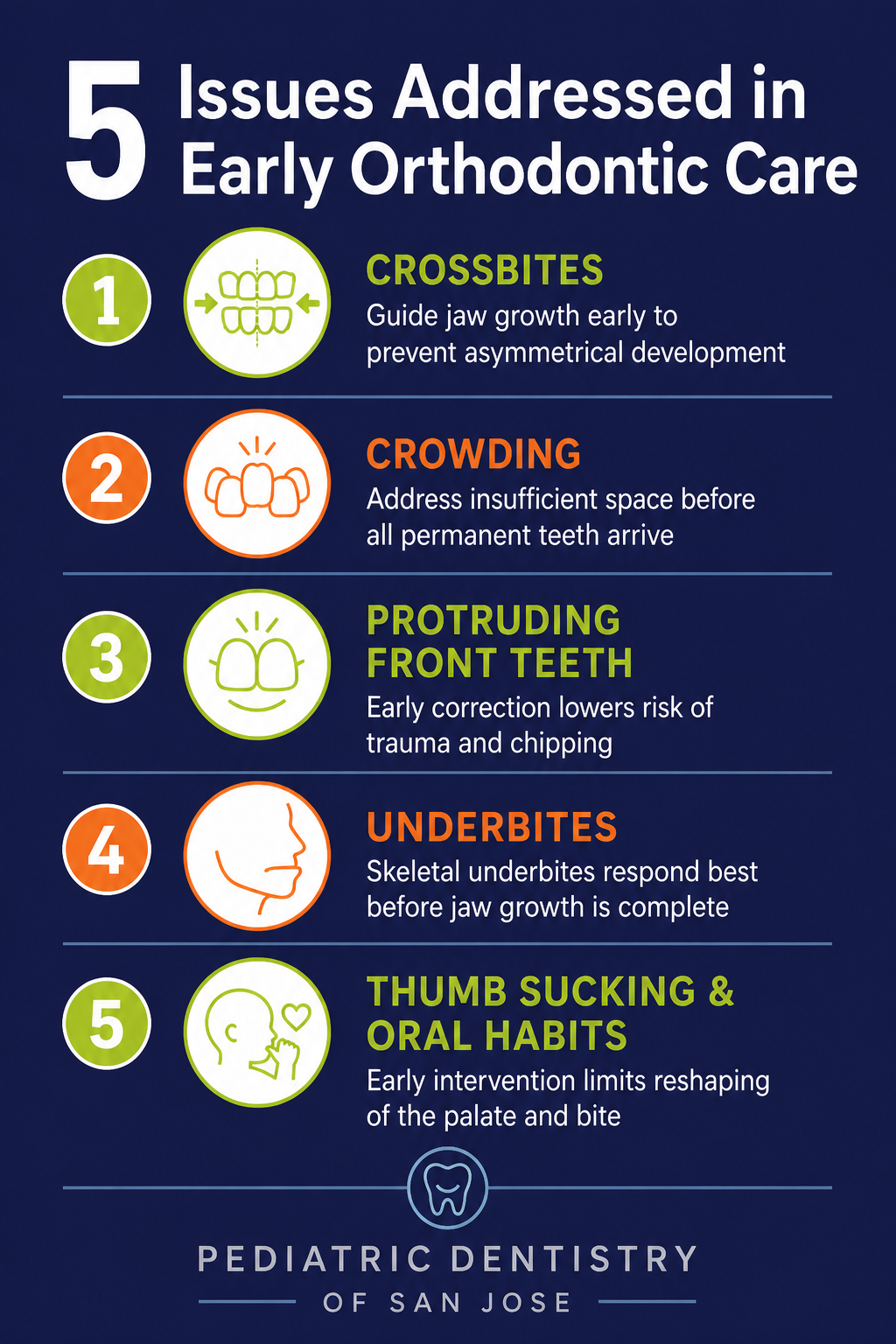
Here are the issues most commonly identified and addressed in early orthodontic care:
- Crossbites: When upper and lower teeth don’t align correctly, guiding jaw growth early prevents asymmetrical development
- Crowding: Addressing insufficient space before all permanent teeth arrive can reduce the need for extractions later
- Protruding front teeth: Early correction significantly lowers the risk of trauma and chipping in active children
- Underbites: Skeletal underbites respond far better to treatment before jaw growth is complete
- Thumb sucking and oral habits: Prolonged habits can reshape the palate and bite; early intervention limits the impact
No matter which category your child falls into, our orthodontics team will walk you through the findings and recommendations in a clear, pressure-free way. You can also find answers to common questions on our FAQ page.
Start the Conversation at Pediatric Dentistry of San Jose
Deciding whether and when to pursue orthodontic treatment for your child is a significant parenting decision that deserves thoughtful, experienced guidance. At Pediatric Dentistry of San Jose, we have been providing comprehensive pediatric dental care to families in East San Jose for over 40 years. Our team provides families with a rare all-in-one resource for early intervention and full orthodontic care.
We’re here to help you make the most informed decision possible for your child’s long-term oral health. Whether your child just turned seven or you’ve had lingering concerns about their bite for some time, now is always a better time to ask than to continue waiting. Schedule a visit with our team today and let us take a closer look together.
Frequently Asked Questions About Delaying Orthodontic Treatment
What are the risks of delaying orthodontic treatment for my child?
Delaying orthodontic care can allow bite problems and jaw misalignment to worsen during the years when the jaw is still growing and most responsive to correction. Issues that are straightforward to address at age seven or eight may require more complex interventions, longer treatment times, or even surgical approaches by the mid-teens. There is also an increased risk of enamel wear, tooth injury, and difficulties with oral hygiene when misalignment goes unaddressed.
At what age should my child have their first orthodontic evaluation?
The American Association of Orthodontists recommends that children have their first orthodontic evaluation by age seven. At this point, enough permanent teeth have come in that an orthodontist can assess jaw relationships, bite alignment, and space for incoming teeth. An early evaluation does not always lead to immediate treatment, but it gives families a baseline and helps identify whether early intervention would be beneficial.
Does Phase 1 orthodontic treatment mean my child will not need braces later?
Not necessarily, but Phase 1 treatment often reduces the scope and complexity of Phase 2 treatment. By addressing jaw growth and foundational bite issues early, Phase 1 can shorten the duration of braces in adolescence, reduce the likelihood of extractions, and sometimes eliminate the need for Phase 2 treatment entirely. The outcome depends on the original issue being treated and how your child grows after Phase 1 is complete.
Is early orthodontic treatment covered by dental insurance?
Many dental insurance plans include orthodontic benefits that cover a portion of early treatment, though coverage varies by plan. Most orthodontic benefits apply a lifetime maximum that can be used across both Phase 1 and Phase 2 treatment. Our team works directly with your insurance provider to review coverage and help you plan the most effective use of your benefits. Flexible payment options are also available for families whose coverage does not fully address treatment costs.
ABOUT THE AUTHOR
Diplomate, American Board of Orthodontics – Pediatric Dentistry of San Jose, San Jose, CA
Dr. Hollander is a Diplomate of the American Board of Orthodontics who earned his orthodontic certificate and master’s degree in Oral Biology from UCLA. He has been published in the American Journal of Orthodontics and Dentofacial Orthopedics and serves as the in-house orthodontist at Pediatric Dentistry of San Jose, bringing specialized training and a collaborative approach to every evaluation and treatment plan he develops for young patients.