

Busy work schedule?
Saturday appointments available for new patients!

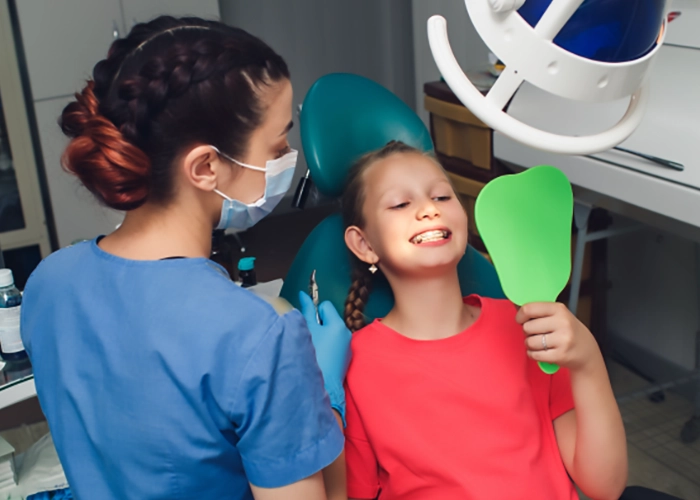

The American Association of Orthodontists recommends that every child receive their first orthodontic evaluation by age seven. By this age, enough permanent teeth have come in for a trained orthodontist to spot developing problems with jaw growth, tooth alignment, and bite relationships. The ideal window for Phase 1 treatment is typically between ages six and ten, while the jaw bones are still actively growing and can be guided more effectively than after growth is complete.
An early evaluation does not always mean immediate treatment. In many cases, our team will simply monitor your child’s development and act when the timing produces the best result. As part of our comprehensive orthodontic services, Dr. Zachary Hollander, a Diplomate of the American Board of Orthodontics with advanced training from UCLA, leads our orthodontic program and works alongside our pediatric orthodontist in San Jose to identify the right time to begin care for each patient.

Phase 1 orthodontics — also called interceptive orthodontics — refers to early orthodontic treatment provided between ages 6 and 10, while a child still has a mix of baby and permanent teeth. The goal is not to finish orthodontic care at this stage, but to correct structural and growth problems that will become significantly harder to treat once jaw development is complete. By working with the jaw and teeth during active growth, Dr. Hollander can redirect bone development, create space for incoming teeth, and correct bite relationships before they become ingrained patterns.
Phase 1 treatment typically lasts 12 to 18 months and is followed by a resting period while remaining permanent teeth erupt. Phase 2 — full alignment with braces or clear aligners — then addresses the final result. Children who complete Phase 1 treatment often require shorter, less complex Phase 2 care, and some avoid it entirely.


Certain indicators can signal that your child may benefit from orthodontic intervention before all permanent teeth have arrived. Catching these signs early gives our team more options and often leads to simpler, shorter treatment.
Difficulty chewing, mouth breathing, or thumb sucking past age five: These habits and functional issues can affect jaw development and tooth alignment if left unaddressed during critical growth periods.
Crowded, overlapping teeth or early and late loss of baby teeth: Premature or delayed tooth loss can point to spacing or eruption problems that may worsen without intervention.
A jaw that shifts, makes sounds, or teeth that do not meet properly: These are signs of a developing bite issue that can be corrected more easily while your child is still growing.



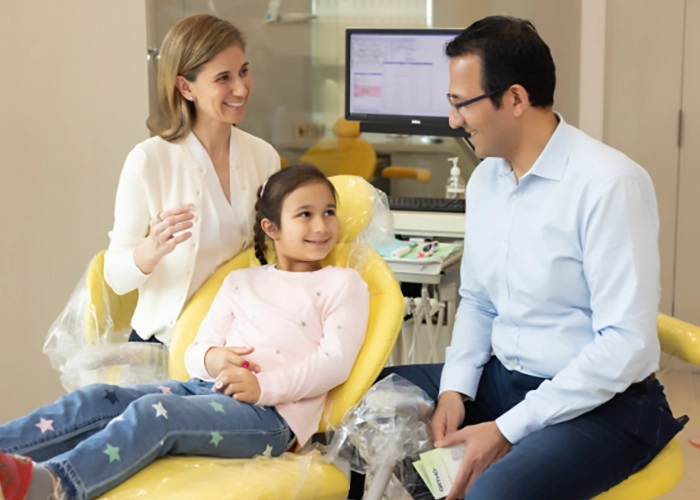

The American Association of Orthodontists recommends that children have their first orthodontic evaluation by the age of seven. This allows us to identify any potential issues early and create a treatment plan to address them.

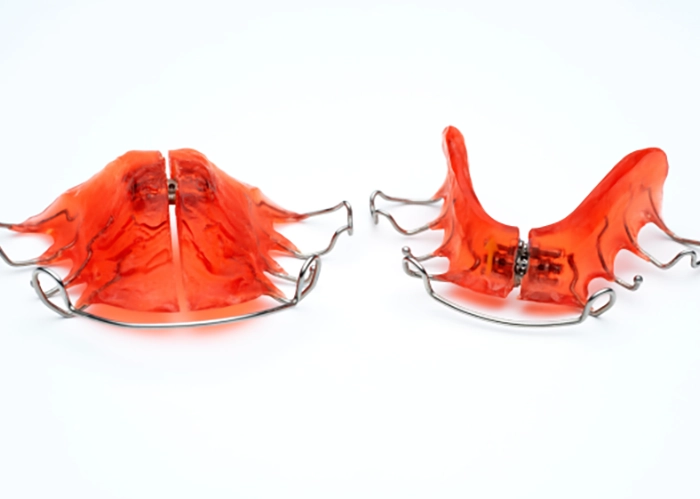
A palatal expander is one of the most common Phase 1 appliances. It fits across the roof of the mouth and gently widens the upper jaw over several months by applying light, consistent pressure to the palate. Expansion is most effective in younger children because the two halves of the palate have not yet fused — a process that occurs in the mid-teens. Expanding the arch early creates space for crowded teeth to erupt correctly, can reduce the need for extractions later, and in some cases improves nasal airway function. Most children adapt quickly and find the appliance comfortable within the first week.
Myofunctional appliances address the relationship between the muscles of the face, tongue, and jaw, and how those muscles influence tooth position and jaw growth. These removable devices — worn primarily at night and for set hours during the day — work by training the lips, cheeks, and tongue to rest and function in positions that support proper jaw alignment. They are particularly effective for children with open bites, narrow arches driven by tongue posture, or habits like mouth breathing and thumb sucking that have begun to affect dental development. Early intervention with myofunctional therapy often reduces the scope of later orthodontic treatment significantly.
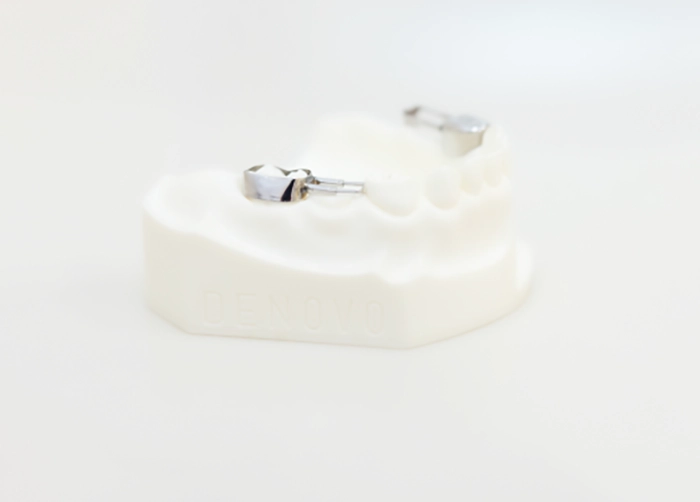
When a baby tooth is lost earlier than expected due to decay or injury, neighboring teeth can drift into the empty space within weeks. Space maintainers hold that gap open so the permanent tooth has room to erupt in the correct position, preventing crowding and misalignment before it starts.

Palatal expanders: Gently widen the upper jaw to create space for permanent teeth and may improve breathing function. This is one of the most common Phase 1 appliances.
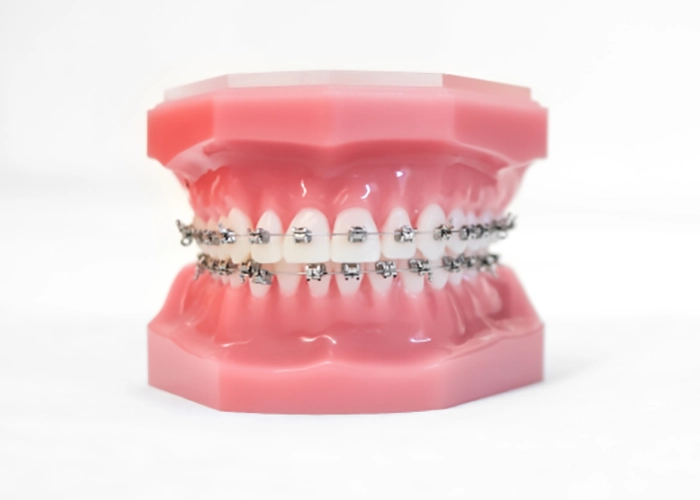
Traditional braces and space maintainers: Braces correct complex alignment issues including crowding, spacing, and bite problems. Space maintainers hold room for permanent teeth when baby teeth are lost early, preventing neighboring teeth from drifting.
Early intervention appliances: These devices guide jaw growth and tooth positioning before all permanent teeth have emerged, making Phase 2 treatment simpler or unnecessary in some cases.
Early orthodontic care follows a two-phase approach designed to match your child’s development. Phase 1 focuses on guiding jaw growth and correcting structural issues during the mixed dentition stage, when both baby teeth and permanent teeth are present. This phase generally lasts between 12 and 18 months, depending on the specific issue being addressed. After Phase 1 is complete, there is usually a resting period while the remaining permanent teeth come in. Phase 2 then addresses final tooth alignment, typically with full braces or clear aligners, and generally lasts between one and three years depending on the case. Children who completed Phase 1 treatment often need shorter and less involved Phase 2 care.
Maintaining strong oral hygiene during orthodontic treatment is important, and our team provides guidance on brushing and flossing around appliances. Routine pediatric dental exams and cleanings continue throughout treatment so that cavities and gum issues are caught early. For children who feel anxious about orthodontic appointments, we offer sedation dentistry options to help them stay comfortable and relaxed. Properly aligned teeth are also easier to keep clean, which supports long-term oral health when paired with preventive treatments like fluoride applications and dental sealants. Beyond the health benefits, a straighter smile can give your child a real boost in confidence during the school years.
Our practice serves families throughout San Jose, East San Jose, Evergreen, Milpitas, and the surrounding South Bay communities. Dr. Hollander brings advanced orthodontic training from UCLA, board certification from the American Board of Orthodontics, and published research in the American Journal of Orthodontics and Dentofacial Orthopedics to every treatment plan. We accept most PPO dental insurance plans, and our staff is here to help you with claims and financing options.
If you have noticed signs of a developing bite or alignment issue, or if your child is approaching age seven and has not yet had an orthodontic evaluation, now is the time to schedule a visit. Contact Pediatric Dentistry of San Jose today to book your child's early orthodontic consultation.



Phone
Monday - Thursday
8-5 pm
Friday
Closed
Saturday
8-12 pm
Sunday
Closed
Please complete and submit the form below and a member of our staff will contact you shortly!
"*" indicates required fields
We use cookies to improve your experience on our site. By using our site, you consent to cookies.
Manage your cookie preferences below:
Essential cookies enable basic functions and are necessary for the proper function of the website.
CloudFlare provides web performance and security solutions, enhancing site speed and protecting against threats.
Service URL: developers.cloudflare.com (opens in a new window)
These cookies are needed for adding comments on this website.
Google reCAPTCHA helps protect websites from spam and abuse by verifying user interactions through challenges.
Google Tag Manager simplifies the management of marketing tags on your website without code changes.
Statistics cookies collect information anonymously. This information helps us understand how visitors use our website.
Google Analytics is a powerful tool that tracks and analyzes website traffic for informed marketing decisions.
Service URL: policies.google.com (opens in a new window)
Marketing cookies are used to follow visitors to websites. The intention is to show ads that are relevant and engaging to the individual user.
Google Maps is a web mapping service providing satellite imagery, real-time navigation, and location-based information.
Service URL: policies.google.com (opens in a new window)